Why Safe Email Is More Important Than Ever
Email is now the central way that families communicate, shop, bank and keep in contact with schools and work. But with that convenience comes serious harm.
Every day, millions of families experience threats in their email without even realizing it. Fraudsters send spoof messages that mirror emails from banks, delivery companies or even school administrators. One errant click can lead to the exposure of your personal information, a stolen bank account or infected devices with malicious software.
The good news? You don’t need to be a computer expert or spend a lot of money to protect your family. There are only four simple tricks that can cut your risk sharply and enable everyone to be safer online.
This guide dismantles common sense email-security practices anyone — parents or kids — can employ. You will learn to identify dangerous emails, erect more effective defenses and develop habits that help protect your family’s digital life.
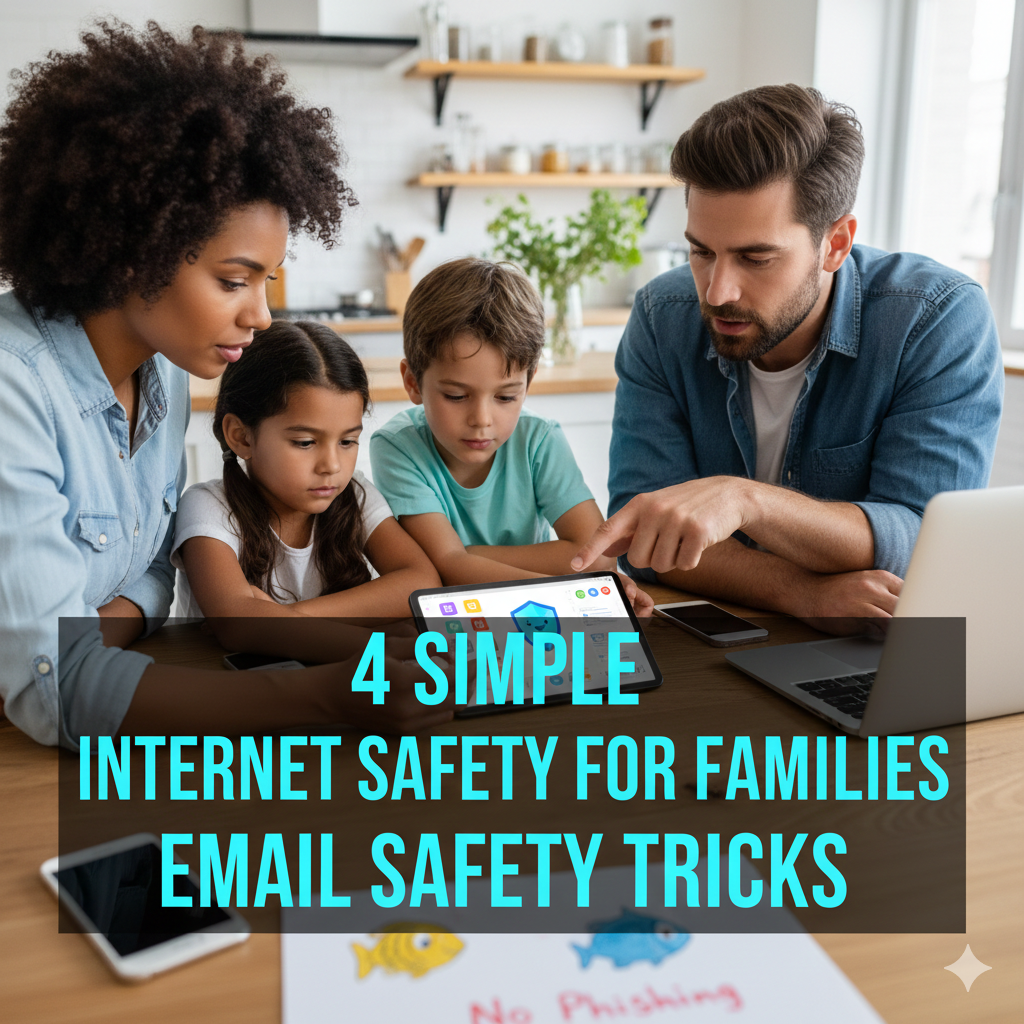
Here are four important email safety tricks every family should know.
Trick #1: Identify and Avoid Phishing Email Scams
Phishing emails are fake messages from scammers trying to trick you into providing personal information. They are now by far the most prevalent email threat families deal with.
What Makes Phishing So Dangerous
The scammers make emails that seem legitimate. They may pose as your bank, Amazon, PayPal and — increasingly often — even your kid’s school. You get hit with these messages that this is so urgent you don’t have time to think.
A phishing email could say your account will be closed unless you click a link right away. Or it might say you have won a prize and that you must provide personal information in order to collect it.
The objective is always the same: Steal your passwords, credit card numbers, Social Security numbers or other sensitive information.
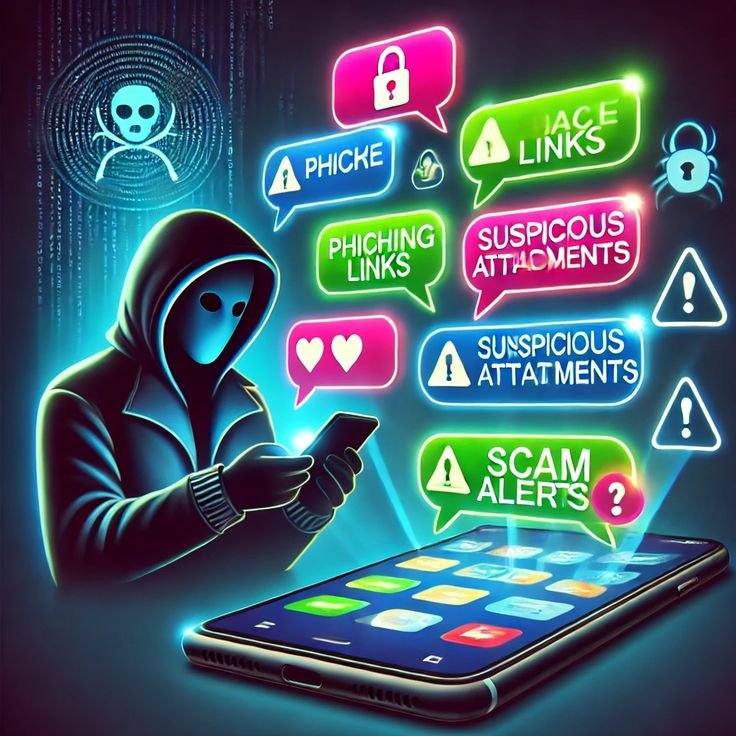
Red Flags That Scream Phishing
It takes only minutes to learn to recognize warnings of a heart attack, and doing so one day could save your life. Watch for these red flags:
Suspicious sender addresses. The email may claim to be from “Amazon” — but the address is something like “amazon-security@random-website.com,” not an official Amazon domain.
Grammar and spelling mistakes. Legitimate companies proofread their emails. If you see many typos or weird expression in a message, assume it’s a scam.
Urgent or threatening language. Any message that urges you to act right now is almost certainly not legitimate. Real firms give you time to react.
Generic greetings. Then there are emails that don’t seem to get your name right (if at all). Your bank knows your name.
Unexpected attachments or links. Don’t click on links or download attachments if you never asked for anything. These can infect your device with malware.
The Hover Trick
And here’s an easy trick that will help you spot phish attacks in progress. Before clicking on a link in the email, hover your mouse over it.
Check the lower section of your screen or for a small popup. This is the real web address of the link.
If it says “Click here to verify your PayPal account” but the hover-over shows some strange site you’ve never heard of, then it’s a scam. Delete the email immediately.
Teaching Kids to Identify Phishing
Children are becoming a more frequent target for scammers, particularly with emails related to games, apps or social media.
Make a simple rule: kids never click links in emails without showing them to a parent first. Turn spotting fake emails into a game the whole family can play.
Then train them with real examples from your own inbox. Share with them the red flags and why they’re unsafe in explaining to them why each email could be dangerous.
This leads to critical thinking skills that serve them for the rest of their life, not just in email but in all digital systems. For more comprehensive guidance on protecting your family online, visit our complete internet safety guide.
Trick #2: Strong, Unique Passwords for Your Email Accounts
Your email password is the master key to your digital kingdom. That’s enough to let someone come in through the back door and reset passwords for banking, shopping, social media and other accounts.
Why “Password123” Doesn’t Cut It
Simple passwords are often favorites of families because they’re easy to remember. But easy for you is easy for hackers, too.
Criminals employ automated programs designed to try millions of password combinations every second. Your simple passwords, like “password” and “123456,” even “your birthday,” are hashed in seconds.
Even slightly more complex passwords, such as “John2024” or “FamilyFun,” are easily defeated by these attacks.
The Recipe for Unbreakable Passwords
So a strong password has three elements:
Length matters most. Go for at least 12 characters; 15 is bound to be better. The more characters, the exponentially harder your password is to crack.
Mix it up. Use a mixture of upper and lower case letters, numbers and symbols. Instead of “happydog” try “H@ppyD0g!2024”
Make it unique. Do not re-use the same password across multiple accounts. One of the world’s most notorious hackers, known as “Guccifer,” liked to prank politicians by releasing their private emails and other secrets.
The Passphrase Method
Create a passphrase to replace those garbled characters you’ll never remember. Combine several unrelated words with numbers and symbols.
For example: “BlueTaco!Forest87#Moon”
This is long, complicated (in terms of the elements), has numbers and a symbol, but you can remember it unlike “tK9$mL2@pQ7#”
Another tactic: Choose a sentence you’ll remember, and use the first letter of each word plus numbers.
“My daughter Emma was born in Chicago in 2015” is “MdEwbiCi2015!”
Password Managers Save the Day
It’s nearly impossible to remember dozens of complex, unique passwords. And this is exactly what password managers are designed to solve.
These apps keep all your passwords in an encrypted vault. To access everything else, you need remember only one master password.
Some of the more well-known ones are LastPass, 1Password, Dashlane or Bitwarden. Most are free for use by families.
Password managers can also create random, super-strong passwords when you set up new accounts. They fill in passwords for you when you visit websites, making security more convenient than doing it yourself.
Family Password Sharing Done Right
Families frequently need to have access to the same set of passwords for streaming services, online shopping accounts or family email addresses.
Do not share your password over text-based messages or standard email. These can be intercepted.
Rather, employ your password manager’s secure sharing. But most of them do let you share certain passwords with close family members, while keeping the password itself hidden from view.
Create separate accounts where you can instead of sharing login information. It’s better security and more accountability.
Trick #3: Enable Two-Factor Authentication
With two-factor authentication (2FA), a second layer of protection is added beyond your password. It would be akin to having both a key and entry combination for your front door.
How Two-Factor Authentication Works
Once you sign in to your email with 2FA turned on, you input your password as usual. But then the system requests a second piece of identification.
This might be:
A text message to your phone with a code. You get a 6-digit number and you need to input it within minutes.
A security code from an authenticator app. Apps such as Google Authenticator or Authy produce new codes every 30 seconds.
A physical security key. A little USB stand you plug into your computer to prove who you are.
Biometric verification. Your fingerprint or face scan on your phone says that it really is you.
If your password gets stolen, someone who tries to break into your account would not be able to do so without this second factor.
How to Add 2FA to Popular Email Providers
Gmail: Sign in to your Google account, click on the profile photo at the top right corner and select Google Account settings, then Security and 2-Step Verification. Follow the instructions to add your phone number or authenticator app.
Outlook/Hotmail: Visit account.microsoft.com, click Security and then Advanced security options. Turn on two-step verification.
Yahoo Mail: Click your profile icon, choose Account Info, then Account Security. Toggle on Two-Step Verification.
Apple iCloud Mail: Open Settings on your iPhone, select your name and then tap Password & Security. Turn on Two-Factor Authentication.
You can set up each account within about five minutes. The protection lasts forever.
Why Families Should Choose Authenticator Apps Over Text Messages
You can use a text message code for this process, or you can install an authenticator app, which is more secure.
Criminals are able to hack text messages via a practice known as “SIM swapping.” They trick your phone carrier into porting your number to their device.
Authenticator apps create codes directly on your phone. No one can hijack them because they never cross networks.
And these applications operate without a cell service or WiFi, which can be convenient on the road.
Reeling in the Whole Family
2FA on email might not even need to be turned on for younger children, if parents closely supervise them. But teens and adults positively should.
Make it a family project. Spend an afternoon setting up 2FA for each other’s accounts.
Another point to remember is, those few seconds you spend logging in can save hours of aggravation because someone has hacked your account.
Keep copies of backup codes safe. This is a temporary code that you can then provide in the event that you lose your phone.
Trick #4: Pause Before Hitting the Click or Share Button
The last tip to keep email safe is having good digital habits. Technology will protect you to only some extent. Smart behavior completes your defense.
The Three-Second Rule
And before you click on any link, open any attachment or reply to any email, take three seconds.
Ask yourself:
Was I expecting this email? If you receive an unexpected invoice or shipping notification, don’t click on it until you confirm it’s real.
Do I know this sender? Unknown holds dare special attention regardless of how professional the email may appear.
Is this too good to be true? It’s a scam: Free money, amazing prizes or an urgent warning about your account, typically are.
What’s the worst that could happen? If clicking could reveal your personal information or download malware, don’t click.
This little pause disrupts the autopilot and engages the thinking part of your brain.
Never Put These Things in an Email
Some information is never suitable to be sent through standard email because it is insecure:
Social Security numbers. Not for job applications, medical forms or anything else.
Credit card details. Instead of emailing card numbers, opt for secure payment portals.
Passwords. Don’t ever email passwords, even to family members.
A photo of a driver’s license or scan of a passport. These can be exploited for identity theft.
Bank account information. Account number and routing numbers need to be transmitted over secured communications only.
Should someone request this data via email, call them directly on a number you receive through your own independent source (not from the email) to confirm the request is genuine.
How to Write an Email Safety Family Agreement
All sit down together and set precise rules that all must follow:
Contact parents before opening email from unfamiliar senders. This is particularly true of younger kids.
Never click on attachments unless you’re 100 percent sure they are safe. Even from friends and family — because their accounts might be compromised.
Report any suspicious emails rather than just deleting them. This allows all to learn and to remain vigilant.
Have different email addresses for different uses. One for school, one for shopping, one for social media sign-ups. This minimizes damage if one account is compromised.
Review privacy settings regularly. Email services evolve their security features, so review settings every several months.
The Email Hygiene Routine
Email hygiene: “You have good email safety as you brush your teeth every day.” It has to be a part of everyday routine.
Delete spam immediately. Don’t just pile it up in your inbox, where you might click something by accident.
Get off email lists that you never read. Less email is less clutter — and fewer opportunities to click the wrong thing.
Log out of email service on public devices. Your family computer, a library computer or your friends’ devices should not remain signed into your account.
Check your sent folder occasionally. If you spot emails that you never sent, your account might be compromised.
Review connected apps and services. Double check which third-party apps can access your email and delete any that you no longer use.
Developing a Family Digital Literacy Practice
Email security is only a part of internet safety. Talk about it to build into larger digital literacy conversations.
Discuss the latest data or scam related news. Discuss what failed and how a family would respond.
Share your own experiences. If you get a phishing email, share it with your kids and walk them through why you know it’s not legitimate.
Celebrate good decisions. If someone in your family recognizes a suspicious email or practices good security, praise them for it.
Stay current with new threats. Scammers constantly develop new tactics. Get into a family habit of learning about emerging risks together. The Federal Trade Commission’s consumer alerts offer updated information on the latest scam trends.
Email Safety Comparison Table
| Security Feature | Free Options | Effort Level | Protection Level |
|---|---|---|---|
| Phishing Awareness | Yes | Low | High |
| Strong Passwords | Yes | Medium | High |
| Password Manager | Yes (basic) | Low | Very High |
| Two-Factor Authentication | Yes | Low | Very High |
| Email Check-In Regularly | Yes | Medium | Medium |
| Child Security Training | Yes | Medium | High |
Typical Email Threats Across All Age Groups
| Age Group | Most Common Threats | Recommended Protections |
|---|---|---|
| Children (Under 13) | Online game scams, fake prize emails | Parental controls, monitored email |
| Teens (13-17) | Phishing on social media and peer impersonation | 2FA, privacy education, reporting systems |
| Adults | Financial scams and work-related phishing | Strong passwords, 2FA features and regular security updates |
| Seniors | Tech support scams plus romance fraud | Additional verification steps and monitoring by family |
Frequently Asked Questions
How can you tell if your email has been hacked?
Indicators include emails you never sent in your sent box, password reset requests for which you didn’t ask, reports from contacts that they got spammy email from your address or an inability to log in with your regular password. If you think your account has been hacked, change your password and set up two-factor authentication right away.
Is it O.K. for children to have their own email accounts?
Children under 13 can create email accounts, but parents should have access and regularly review their activity. Look for email providers specifically created for kids that come with safety features. Start teaching them about email safety early, not when they’re older.
Can I check email on public WiFi?
Public Wi-Fi hotspots are not secure. Never log into your email on public WiFi unless you are connecting through a VPN (Virtual Private Network) that encrypts your connection. If you need to access email on public WiFi without a VPN, avoid viewing sensitive data or making purchases.
I clicked on a phishing link, what can I do?
Don’t panic. Immediately disconnect from the internet. Perform a scan of your device for malware using antivirus software. Change your email password and the passwords for any accounts where you use the same credentials. (This is why you should enable two-factor authentication if you haven’t already!) Watch your accounts for unusual activity.
How frequently do I need to update my email password?
An occasional reminder: If you have a strong, unique password and two-factor authentication is set up, you don’t need to change it often. Do it as soon as you believe that your account has been compromised or after a data breach at a service that you use or when someone you shared the password with no longer needs access to your accounts.
Is antivirus sufficient to protect me against all malicious email?
Antivirus software does offer some protection against malware and other phishing attacks, but it is not infallible. Fraudsters are continually coming up with new ways to avoid security software. Your own vigilance and good habits are still your first and best protection against email threats.
Taking Action Today
Email security doesn’t have to mean costly software or technical know-how. These four simple tips — recognizing phishing emails, employing strong passwords, activating two-factor authentication and preventing clicking without thinking — can form powerful protection for you and your family.
Start small. Choose one trick and try it this week. That might mean enabling two-factor authentication on your primary email account. Or maybe you’ll draft a family pact on email safety.
Then, in a week, double down. In a month, your vulnerable family will have become vigilant.
And always remember that email safety is a continual dialogue rather than a one-off act. The technology changes, the scams evolve and children get older, requiring varying levels of supervision and instruction.
Please make it a family priority to stay informed and to protect one another. Share what you learn. Ask questions when it seems something is off. Encourage one another in your quest toward better digital habits.
The online world is an incredible place to learn, connect, and grow. With these email safety tips added to your routine, you can enjoy email benefits while avoiding the risks!
Your digital security is only as secure as its weakest link. Take that step today. Your family’s safety is worth the little bit of effort these easy hacks take.