Why Your Family Needs New Online Safety Rules … Right Now
Our homes are powered by the internet in much the same way they run on electricity. We eat on it, study and work. We use it for books and entertainment, shopping and connecting with loved ones. But the internet, unlike electricity, is filled with invisible hazards that threaten our children.
In every minute, kids around the globe are experiencing cyberbullying, online predators, inappropriate content and privacy risk. The scary part? But until something bad happens, most parents have no clue what their children are encountering online.
Here’s shocking news: Per day, on average, children are on screens for 7 hours. Which is more time than they spend sleeping or in school. For those hours, they are exposed to millions of websites, apps and strangers.
The good news? You don’t have to be a tech genius to keep your family safe online. These little habits applied consistently form a protective bubble around your children in the digital space.
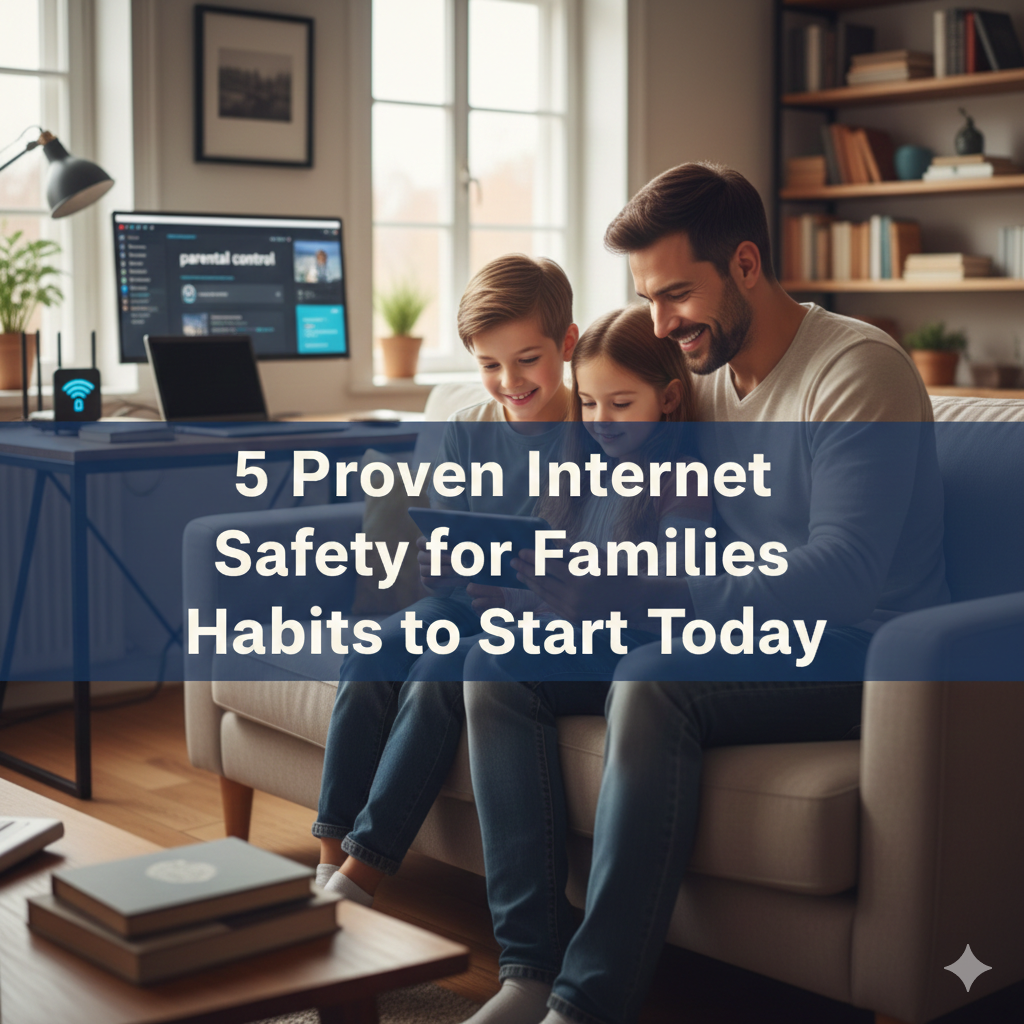
This article was inspired by five habits that truly work for real families. These are not complicated rules; they’re not expensive solutions. They’re pragmatic things to do that you can (and should) start doing right now, even if your tech skills are minimal.
Together, let’s develop better internet for your family.
Habit 1: Make a Family Media Use Plan Everyone Follows
Consider the family media agreement house rules for the digital world. But just as you have bedtimes and chore schedules, your kids need rules when it comes to use of the internet.
What Makes for a Good Agreement
But a family media agreement is not a list of punishments. It is a contract we all, parents included, have signed and agreed to honor.
First, sit down with your entire family. Turn it into a conversation, not a lecture. Poll your kids for what they think is fair. You’ll be amazed at how reasonable children can be when they feel listened to.
So, too, should your contract:
Screen Time Limits: What is the realistic number of hours you would like to limit activities? Homework or school research can take more time than playing video games or using social media.
Phone-Free Zones: Establish places that are off-limits for phones and tablets. Bedrooms, dinner tables and bathrooms are the most common choices for families.
Apps and Sites You’ve Approved: Make a list of places your kids can visit without asking. Everything else needs to be discussed.
Password Sharing: Make it clear that parents may have access to all accounts and devices. This isn’t spying; it’s safety.
Consequences of Breaking the Rules: Determine as a team what will happen if someone breaches the agreement. And ensure responses are proportionate to the severity of rule breaking.
Making Your Agreement Stick
Write everything down. Print it out. Get everyone to sign it as if it were a real contract. Tack it up somewhere you’ll see it, as on the refrigerator.
Review your agreement after 3 months. Your rules should grow with the kids and change as technology evolves.
Here’s the key element: It’s the same rules for parents. If you are scrolling your phone at dinner, so will your kids. Teach the behavior you want to see.
A Texas mom said that screen time battles decreased by 80% after they signed a family agreement. Why? It’s because the rules were clear, fair and applied to all.

Habit No. 2: Centralize Devices for High-Use Times
Privacy seems like a positive — no one wants to be watched as they work out, for example. But the concept can be perilous for children online. Anything goes when children use devices in their bedrooms behind closed doors without your knowledge.
The Power of Physical Placement
Relocate all charging stations to family spaces such as the living room or kitchen. This small development can change the way your family interacts with technology.
When devices linger in shared spaces, many things happen on their own:
Kids are less likely to visit inappropriate sites. They know at any minute you might peek in.
Discussions about what kids encounter online take place more frequently. When you’re around, they will ask for guidance instead of making costly mistakes in isolation.
Sleep improves dramatically. Screens in the bedroom both interfere with sleep patterns and beg for late-night use.
You notice warning signs faster. But when you’re in the same room, it becomes obvious immediately if online is affecting your child’s mood or behavior.
Creating Your Family Tech Station
Pick someplace central with plenty of light and comfortable seating. This is your family’s tech hub.
Set up a charging station with ports for everyone’s devices. Establish a nightly collection time, for example 30-60 minutes before sleep.
Do make this area phone-friendly, but not phone-centric. Kids should be able to do homework, video chat with grandparents or play age-appropriate games while remaining part of family life.
Table: Device Location and Safety
| Device Location | Safety Level | Sleep Quality | Family Interaction | Risky Behavior |
|---|---|---|---|---|
| Child’s bedroom | Low | Poor | Minimal | High |
| Common Area | High | Good | Strong | Low |
| Shared study space | Medium-high | Good | Moderate | Medium-low |
| Parent’s room | Medium | Fair | Low | Medium |
It smacks to some families of a lack of trust in their kids. Frame it differently. Point out that you keep nice things in good spots, not because you’re sure someone will take it otherwise, but because it’s just what makes sense to do. Digital safety too just works that way.
A California father said he realized his daughter was being cyberbullied after glancing at her in the living room while she was using her tablet and noticing tears. That might never have come up if she were in her bedroom at the time.
Habit 3: Get to Know Apps and Platforms Before Your Kids Do
Most parents allow children to download apps without first researching them. This is the equivalent of letting children cross a busy street without verifying traffic.
Staying One Step Ahead
Your job is not to know everything about technology. It’s your job to remain curious and learn with your children.
If you are trying to decide whether an app or game for your child is worth the download, there’s nothing wrong with saying “Let me think about it,” and doing some research. Take these steps:
Research the Platform: Read reviews from other parents for 10 minutes. Common Sense Media has detailed ratings and age guidelines for just about every popular app out there.
Review the App: Before allowing your kid to download, doing so yourself is an upfront must. Explore the privacy controls. Check what data it collects and whom your child can be contacted by.
Appreciate the Social Aspects: Plenty of games have chat features or can accept friends as well. Determine whether strangers are able to communicate with your child through the app.
Watch for In-App Purchases: Some “free” games pester kids to spend real money. Turn off in-app purchases or create spending limits.
Read the Terms of Service: Yes, they’re boring. But you want to know about what the company will do with your child’s information.
Creating Your App Approval System
Make a simple three-tier system:
Green Light Apps: Pre-approved and ready for independent use. I’m talking about educational apps, creative tools and family-friendly games.
Yellow Light Apps: Require parental supervision or time limits. This is where social media sites generally come in.
Red Light Apps: What you don’t do at home. That includes apps featuring offensive content, dangerous challenges or those with predatory behavior.
Update this list monthly. New apps pop up all the time, while old ones get new features.
Questions to Ask Regarding Any New Platform
Before OKing an app, ask yourself:
- Is it possible for strangers to communicate with my child through this app?
- Does it share location information?
- What’s the minimum age requirement?
- Have there been news reports about safety issues with this platform?
- Can I monitor my children’s activity without being obtrusive?
- Does it promote either healthy or unhealthy habits?
One parent found that a seemingly innocent children’s game her son wanted to play included a chat function in which adults would frequently reach out to kids. She only found out about this one because she downloaded first and explored second.
Stay educated. Participate in online parent groups where people talk about new apps and platforms. There are experts in tech safety on social media. Follow them.
For more comprehensive resources on protecting your family online, visit our internet safety guide for additional tips and tools.
Habit 4: Check In Weekly on Online Experiences
Discussing internet safety once a year is not effective. The online dangers change weekly and the time your children spend online changes constantly.
Making Conversations Comfortable
Your children are not likely to come forward voluntarily with tales of their online woes. They are afraid of losing device privileges or letting down their parents.
Foster an environment where children feel they can talk about anything and everything they have seen or come across online, including any mistakes that they might have made.
Set aside a defined time at regular intervals to have such conversations each week. For many families, Sunday nights are good. Keep it casual, not formal.
What to Discuss During Check-Ins
Don’t interrogate. Engage in real conversations by asking open-ended questions:
“What was the most interesting thing you saw online this week?”
“Was there anything strange, upsetting, or confusing while you were gaming?”
“Do any of your friends have to put up with mean comments or messages?”
“Have you seen anything that made you concerned about someone’s safety?”
Share your own online experiences as well. When parents talk about spam in their inboxes, frustrating conversations with rude strangers, or navigating misinformation online — kids see that everyone faces these challenges.
Warning Signs to Watch For
During these check-ins, take note of whether your child:
- Becomes secretive about device use
- Shows mood changes after online activity
- Gets texts or calls from unfamiliar numbers
- Has new online friends they can’t explain
- Withdraws from family activities
- Appears to suffer from social media-inspired anxiety or depression
These are behaviors that could be symptomatic of cyberbullying, online predators, or viewing inappropriate content.
Building Trust Through Consistency
The first couple of check-ins might be awkward. Kids might give one-word answers. Keep trying.
Celebrate when they share problems. Thank them for being honest. Don’t overreact, even if they’re telling you something that alarms you.
When children know that you will help, rather than deliver punishment, they are more likely to come to you before small problems become big catastrophes.
A middle school teacher reported that students whose parents talked to them about internet safety on a regular basis handled online disputes much more effectively than those whose parents did not address the subject.
Habit 5: Treat Parental Controls as Tools, Not Substitutes for Involvement
Parental control technology is absolutely amazing. Filters and monitoring software, however, can’t substitute for engaged parenting.
Choosing the Right Tools
Most devices, apps and internet providers come with built-in parental controls. Expensive third-party software isn’t always necessary.
Router-Level Controls: Your home WiFi router almost certainly includes the ability to block adult content, set internet schedules and pause individual devices.
Device Settings: All iOS and Android devices have strong parental control capabilities. You’re also able to specify screen time limits, stop app downloads or filter content.
Platform-Specific Controls: YouTube, Netflix, TikTok and other platforms have specific safety settings for kids.
Third-Party Software: Tools such as Bark, Qustodio and Net Nanny also provide comprehensive supervision across various devices.
Setting Up Effective Controls
Begin with the basic protections and make changes as warranted:
Content Filters: Restrict adult content, prevent violence and block age-inappropriate material. Remember that filters aren’t perfect. They occasionally allow good content through, or fail to catch bad content.
Time Limits: Choose shut-off times for games, social media and entertainment apps. School apps may have differing limits.
App Restrictions: Require approval for downloads and purchases.
Location Tracking: You can track where your kids are without being obtrusive. This is for safety, not surveillance.
Social Media Monitoring: Monitor requests for friends, messages and posts frequently. Be honest that you’re doing this.
The Balance of Control and Trust
Parental controls should wane and trust wax as children mature. A 7-year-old requires different kinds of protections than a 15-year-old.
Use controls to make safe spaces, not to spy. And teach your kids why these tools are in place. If they understand the logic, they are less likely to try to circumvent these rules.
Table: Age-Appropriate Parental Control Levels
| Age Group | Content Filtering | Time Limits | App Approval | Location Tracking | Social Media Access |
|---|---|---|---|---|---|
| 5-8 years | Very Strict | 1-2 hours/day | Parent Installs Only | Always On | None |
| 9-12 years | Strict | 2-3 hours/day | Requires Approval | Always On | Limited, Monitored |
| 13-15 years | Moderate | 3-4 hours/day | Parent Reviews | Negotiable | Yes, with Monitoring |
| 16-18 years | Light | Negotiable | Discuss Major Apps | Emergency Only | Yes, with Check-ins |
Increase freedom when a child is showing responsible behavior. And if they violate the rules, controls snap back temporarily.
The point is not to control your children forever. It’s the training of their self-control and good judgment for when they do leave home.
A cybersecurity expert said parental controls were like training wheels on a bicycle. They help children to learn balance, but you do eventually take them away and allow the kids to ride on their own.

Common Errors That Families Make About Internet Safety
Even concerned parents end up falling into pitfalls that thwart their efforts for children’s online safety.
Waiting Until Problems Occur
Too many families don’t talk about internet safety until a child runs into danger. This is like teaching someone to swim after they have fallen into deep water.
Begin practicing safety habits at the outset of kids using devices, even if they’re just watching educational videos.
Focusing Only on Strangers
Parents talk to children about “stranger danger” online, but forget about the danger that may be lurking closer to home. Cyberbullying tends to come from fellow students, not strangers.
Teach kids that there are no hard and fast rules for who can act inappropriately online, including friends who might screenshot private conversations or post an embarrassing photo.
Thinking of Internet Safety as One Talk
Everything about online safety cannot be taught in a one-time lesson, like teaching a child to look both ways before crossing a street once and expecting them to remember forever.
Digital dangers evolve constantly. Regular, ongoing conversations are essential.
Ignoring Your Own Digital Habits
Children learn more from watching than from listening. If you never seem to put down your phone, or if you’re breaking your own screen time rules and sharing excessively on social media, your kids will mimic those behaviors.
Lead by example in modeling healthy digital citizenship.
How These Habits Work Together
These five habits aren’t distinct strategies. They operate in unison like the notes of an orchestra producing melody when repeatedly exercised.
Your family media agreement is a good starting point. It establishes expectations everyone understands.
It’s easier to enforce the agreement and notice that something’s amiss if devices are kept in common areas.
Familiarize yourself with apps before your children do and that saves them from downloading potentially perilous platforms that violate the terms of your arrangement.
Weekly check-ins allow you to update the agreement and go over new apps or address concerns before they become serious issues.
Parental controls are the support that reinforces everything else, by erecting technological barriers to support your family’s values and rules.
Begin with one habit this week. Once that feels routine, add another. In a month, all five habits will be natural.
Frequently Asked Questions
How young is too young for the internet?
There is no magic age, but most experts agree that minimal screen time is best before age 2; content should be limited to educational content for ages 2-5; and internet access should be supervised from about age 6. Instead of simply restricting time, promote quality content and active co-viewing.
Should I monitor my child’s messages?
This varies with age and situation. Kids younger than 13 should assume that their parents will occasionally check their messages. Yes, teens need increased privacy, but they also need to know you will check if there are warning signs. Remember, it’s better to be honest than to secretly spy on what your child is up to.
What if my child refuses to adhere to internet safety guidelines?
Consequences should match the violation. Even minor policy violations could result in being stripped of device privileges for a day. But more serious infractions, such as interacting with strangers online or visiting forbidden sites, may justify longer restrictions and deeper conversations about why rules are in place.
Do parental control apps really work?
There is adequate protection available in many free offerings. Paid services provide additional features such as social media monitoring and more advanced filtering. Consider what you need for your family before purchasing. And always remember no software can replace active parenting.
How can I keep up with the new apps and trends?
Read parenting blogs about technology, participate in Facebook groups for parents and have your children teach you about platforms they use. Many schools send out newsletters about digital trends that are impacting students, as well.
What do I do if my child stumbles on something online they shouldn’t?
Stay calm. Thank them for telling you. Do not, as punishment for honesty, take their device away or they will not come to you next time. Block the source, report it if possible, and talk about why what was said or shown is harmful.
Is it fine to track the location of my teenager’s phone?
Have an open conversation about it – don’t install tracking apps in secret. Many families also consent to location sharing for safety reasons, such as making sure youngsters arrive at a destination. Show respect for privacy by not always checking their whereabouts when it is not necessary.
How can I prevent my child from falling victim to online predators?
Point out that predators pose as other kids, ask personal questions or secrets not to be shared with parents and request photos. Act out scenarios and let children know to come to you right away if someone makes them uncomfortable, no matter what that person tells them.
Taking the First Step Today
Internet safety for families doesn’t have to be perfect. It takes the daily diligence of small acts.
So before you close this article, choose one habit to start today. Perhaps you’ll write up a media contract for the family, move that phone charging station into the kitchen or download that app your child is asking to join.
Have your first check-in conversation tomorrow. Ask your child what they did online today and actually listen to the response.
By next week you will have protection systems most families don’t ever put in place.
The internet is not going to get any safer by itself. Money matters more than safety to technology firms. Schools are not able to police what occurs at home. The habits you develop within your family will be the ones that keep your children safe.
All these 5 habits have saved thousands of families from cyberbullying, predators, scams and harmful content. They will work for your family, too.
Your children are part of a digital world more sophisticated than any past generation encountered. They need direction, not just limits. They need discussions, not simply lectures. They need parents who care enough to remain attentive about their online lives.
Start today. Start small. Begin with one habit you feel you can manage.
Because every child has the right to discover the magic of the internet without being exposed to its real dangers.
The security you establish now will lay the groundwork for your children’s digital future. Make it strong.